Qi's Bowling Ball Stratified Papaver Somniferum Poppy Seeds
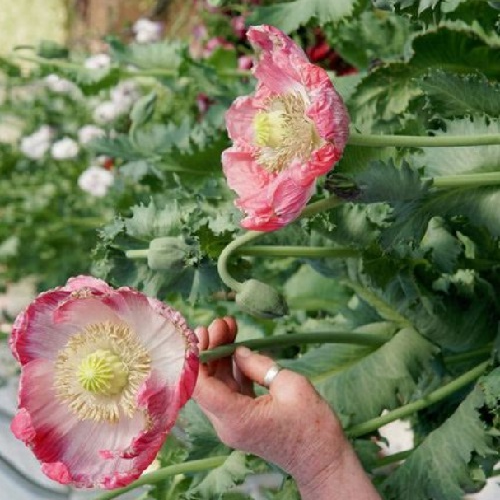
This poppy on steroids was selected from many for its extraordinarily large seed pods that create notable dry flower arrangements—the silky pink flowers welcome summer with their waving banners in the garden.
The biggest rattlepods we’ve seen, Bowling ball isn’t too much of an exaggeration when describing this poppy’s seed head, but tennis ball size is closer to the truth. Fleeting, pink-petaled blooms fade to developing the enormous pods on sturdy, 36–48 inch tall stems. For the largest pods, direct sow the seed in late summer to fall, and the overwintered crop will yield magnificent crops for a statement in dried arrangements.
Fleeting, pink-petaled blooms fade to developing the enormous pods on sturdy, 36–48 inch tall stems. The largest poppy flowers, these poppies have very large seed pods; they can be the size of a baseball. The seed pods are prized for floral arrangements and are chock-full of tiny blue-gray, brown or white seeds that are perfect for bread making and baking. Tender perennial or annual in cold climates. Full to part sun.
Copyright 2017–2026 Heirloomsnhybrids. All Rights Reserved.