Mission Bells California Poppy Seeds

Mission Bells California Poppy Seeds — Vintage Semi-Double & Double Strain
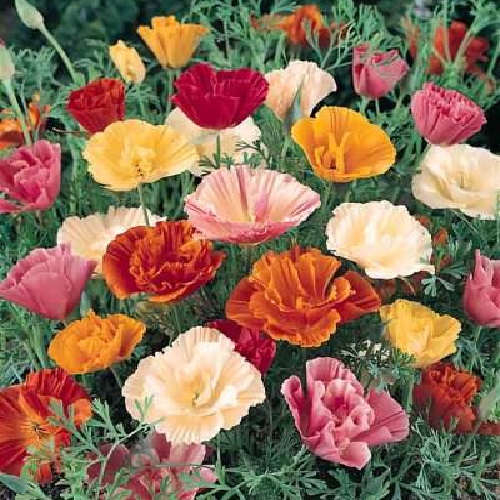
Fill your borders and sunny paths with a charming, multi-layered festival of color using our premium Mission Bells Mixed Colors California Poppy Seeds. A beloved historic variant of Eschscholzia californica, the Mission Bells strain is highly celebrated for producing beautifully fluted, semi-double and fully double-petaled flowers. The crinkled, paper-thin petals form stacked, layered cups that catch the wind gracefully, creating a fuller, more pillowy texture than traditional wild single poppies.
Product Features
- Plush Semi-Double & Double Layers — Ruffled, multi-tiered petals bring an extra-fluffy texture to rock walls and wild meadows.
- Festive, Multi-Hued Color Palette — A lively heirloom blend erupting in vibrant shades of deep coral, golden-apricot, cream-yellow, fiery orange, and rich rose-pink.
- Lacy, Glaucous Blue-Green Foliage — Compact mounds of fine-cut, fern-like leaves grow 10–12 inches tall, framing the brilliant blossoms elegantly.
- Exceptional Free-Flowering Habit — Keeps producing an endless series of ruffled flower heads from late spring directly up to autumn's frost.
- Hardy and Resilient Nature — Requires almost no care once established; flourishes easily in lean, neglected, rocky, or drought-prone soils.
Growing Information
Mission Bells California poppies are direct-sown effortlessly and ask for minimal attention:
- Sunlight: Total, unfiltered full sun exposure
- Soil: Lean, dry, sandy, gravelly, or fast-draining unimproved ground
- Water: Very light; highly drought-resistant after establishing deep roots
- Planting: Direct surface-sow in early spring or late autumn—press lightly to anchor but do not cover, as seeds require light to germinate
- Germination: Sprout emergence occurs within 10–14 days during cool spring air cycles
Because these poppies quickly send down a long, delicate vertical taproot that easily suffers from transplant shock, direct sowing where they will stay permanently is critical.
Ideal For
- Ruffled borders, low-maintenance beds, and retaining walls
- Cottage gardens, wildflower naturalized meadow sweeps, and xeric zones
- Gravel pathways, rockeries, and thin, unamended topsoil spaces
- Pollinator pathways (e.g. providing an open source of pollen for native bees)
- Reliable annual self-sowing across multiple seasons
Why Gardeners Love This Variety
The Mission Bells mixture offers an incredible balance of **wild, drought-tolerant resilience and rich, multi-layered visual depth**. They demand no pampering or heavy fertilizers, yet blanket the soil in a cheerful, heavily petaled carnival of color that fits right into a curated old-world garden ledger.
To germinate Mission Bells California Poppy seeds, direct-sow them outdoors in early spring or late fall directly over a cleared, raked soil surface. Gently press the seeds down with a flat board or palm to anchor them, but do not bury them with soil or compost. Mission Bells poppy seeds require ambient solar light to break dormancy and sprout, which happens in 10 to 14 days under cool weather.
Mission Bells is a premium semi-double and fully double heirloom strain. While the vast majority of the seeds will bloom with beautiful multi-layered, ruffled rows of petals, it is normal for a small percentage of flowers to revert to classic single-layered cups. This variation is standard for vintage poppy strains and adds to their naturalized charm.
The best times are early spring (as soon as the ground can be worked and while temperatures are still cool) or late autumn. Sowing in late autumn allows the seeds to settle into the soil over winter and sprout at the exact right moment in early spring, yielding earlier blooms and more robust taproots.
Yes, deadheading spent blooms regularly is highly beneficial. Removing fading flowers before they transform into long, pointed seed pods forces the plant to redirect its energy into pushing out a continuous flush of fresh, ruffled double buds all summer long.