Ice Plant / Livingstone Daisy Seeds
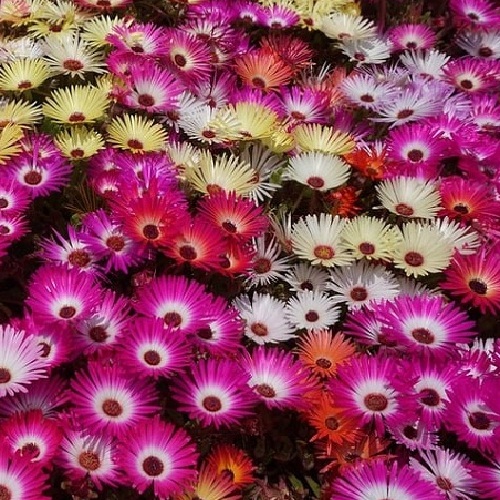
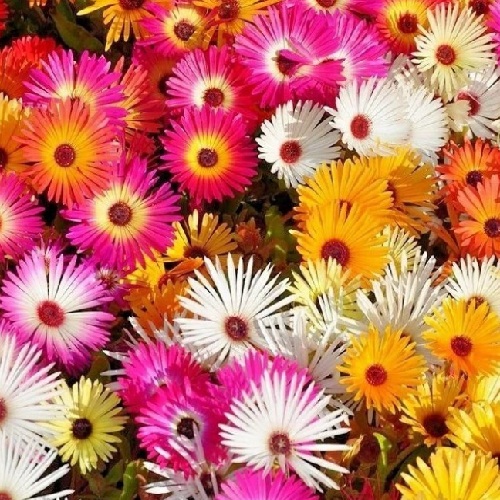
Ice Plant / Livingstone Daisy (Dorotheanthus bellidiformis) is a low‑growing annual with succulent foliage and jewel‑toned daisy blooms that open in full sun. The flowers appear in brilliant shades of pink, red, orange, yellow, white, and bicolors, often with contrasting centers that create a carpet of color in rock gardens, borders, and containers.
What is Ice Plant / Livingstone Daisy?
A sun‑loving annual frequently highlighted in gardening guides for its ability to thrive in poor, sandy soils, tolerate drought once established, and produce masses of shimmering blooms that close in low light and reopen in bright sun. Plants form compact mats, making them ideal for edging, slopes, and dry ornamental areas.
Why gardeners choose it:
• Jewel‑toned daisy blooms that carpet the ground in color
• Succulent foliage adapted to dry, sunny conditions
• Excellent for rock gardens, slopes, and containers
• Performs well in poor, sandy, or gritty soils
• Blooms heavily in full sun with minimal care
Growth Habit: Low, spreading annual
Bloom Colors: Mixed bright jewel tones
Height: 4–8 inches
Sun Requirement: Full Sun (flowers open fully in bright light)
Sowing Depth: Surface‑sown or very lightly covered
Planting Instructions:
• Sow Livingstone daisy seeds in spring after frost, or start indoors 6–8 weeks earlier.
• Press seeds gently onto the soil surface; they benefit from light for germination.
• Use a sandy, well‑drained mix; avoid heavy, waterlogged soils.
• Keep the seedbed lightly moist until germination (7–21 days), then reduce watering.
• Transplant or thin seedlings to 6–8 inches apart for a solid carpet effect.
• Provide full sun; flowers may remain partially closed in shade or cloudy weather.
• Water sparingly once established—succulent foliage stores moisture and prefers drier conditions.
Best uses and growing tips:
• Ideal for rock gardens, gravel beds, and dry borders where many annuals struggle.
• Excellent in shallow containers and troughs with gritty soil.
• Combine with other low, sun‑loving annuals for extended bloom and texture.
• Avoid rich, heavily fertilized soil, which can lead to lush foliage but fewer blooms.
• In climates with cool nights, choose the warmest, sunniest site for best flowering.
Copyright 2017–2026 Heirloomsnhybrids. All Rights Reserved.
