Plains Coreopsis Seeds

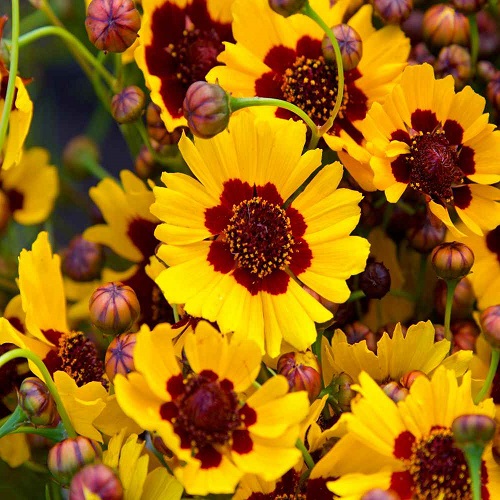
Plains Coreopsis (Coreopsis tinctoria) is a classic annual wildflower known for its bicolored gold‑and‑red daisy‑like blooms, fine, airy foliage, and ability to thrive in lean, dry soils. Flowers appear in rich combinations of golden yellow petals with mahogany‑red centers or bands, creating a lively tapestry in meadows, borders, and pollinator plantings.
What is Plains Coreopsis?
This annual tickseed species is native to prairies and open fields. It is frequently recommended in wildflower and pollinator‑garden guides because it germinates easily, blooms quickly, and performs well in low‑fertility, drought‑prone sites.
Why gardeners choose it:
• Bicolored gold‑and‑red blooms for meadows and borders
• Fast‑growing annual with extended flowering season
• Excellent for pollinator gardens—attracts bees and butterflies
• Thrives in lean, sandy, or gravelly soils
• Ideal for naturalized wildflower mixes and roadside plantings
Growth Habit: Upright, branching annual
Bloom Colors: Gold with mahogany‑red centers and bands
Height: 12–30 inches
Sun Requirement: Full Sun
Sowing Depth: Surface‑sown or lightly covered
Planting Instructions:
• Direct‑sow plains coreopsis seeds outdoors in spring after frost.
• Broadcast over prepared soil and press lightly; a thin covering improves germination.
• Keep soil lightly moist until seedlings establish (7–21 days).
• Space plants 8–12 inches apart, or allow natural spacing in meadow plantings.
• Avoid heavy fertilization—plants bloom best in lean soil.
• Deadhead spent flowers to extend blooming, or allow seed to mature for reseeding.
Copyright 2017–2026 Heirloomsnhybrids. All Rights Reserved.
