Chicory Seeds

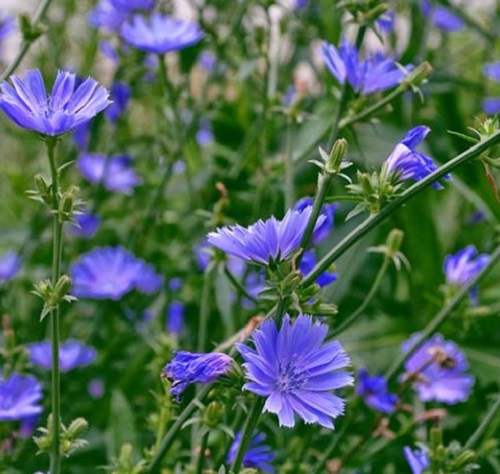
Chicory (Cichorium intybus) is a deep‑rooted perennial known for its sky‑blue roadside flowers, wildlife forage value, and soil‑improving taproot. It is widely used in meadow plantings, pasture mixes, and naturalized wildflower strips, and is often mentioned in gardening and homesteading guides for its toughness and versatility.
What is Chicory?
Chicory is a hardy perennial with a strong taproot, upright stems, and daisy‑like blue blooms. It tolerates drought, poor soil, and heavy grazing, making it useful for wildlife plots, pollinator plantings, and long‑term soil improvement.
Why gardeners and growers choose it:
• Deep taproot breaks up compacted soil
• Blue flowers attract bees and pollinators
• Valuable forage for deer and livestock
• Thrives in lean, dry, or rocky ground
• Naturalizes easily without demanding care
Growth Habit: Upright perennial with deep taproot
Bloom Color: Sky blue
Height: 24–48 inches
Sun Requirement: Full Sun
Sowing Depth: 1/4 inch
Planting Instructions:
• Direct‑sow chicory seeds outdoors in spring or fall.
• Prepare a firm seedbed; cover seeds 1/4 inch deep.
• Keep soil moist until seedlings establish (7–21 days).
• Space plants 10–14 inches apart in rows or broadcast for meadows.
• Chicory prefers full sun and well‑drained soil but tolerates poor conditions.
• Allow plants to mature for deep root development and long‑term stands.
Copyright 2017–2026 Heirloomsnhybrids. All Rights Reserved.
